“
Liquidity risk is the most underestimated type of financial risk — until it is the only type that matters.
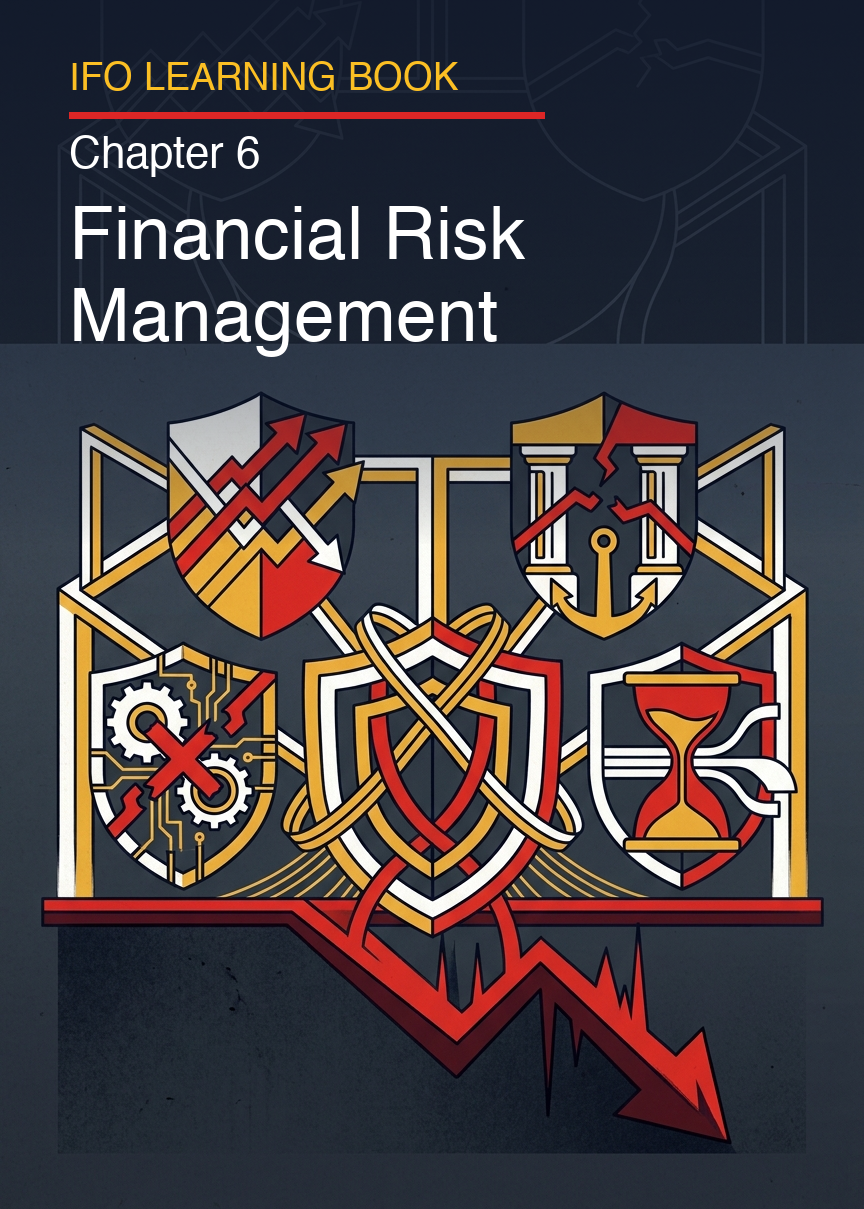
Identifying, measuring, and managing financial risks through instruments and frameworks
Risk is inherent in every financial decision. This collection builds a systematic understanding of financial risk: the four principal types — market, credit, operational, and liquidity — the quantitative and qualitative techniques used to measure them, the instruments and strategies available for hedging, and the regulatory frameworks that govern how financial institutions manage and report their risk exposures.
The eight articles follow the IFO Chapter 6 syllabus precisely. They move from type-level understanding — what distinguishes market risk from credit risk — through measurement techniques including Value at Risk and credit scoring, to the mechanics of hedging with derivatives and the requirements imposed by international standards such as Basel III.
By the end of this collection, a student should be able to classify any risk exposure by type, describe at least two measurement approaches for each type, explain how a specific hedging instrument works mechanically, and articulate what a risk management framework is trying to achieve at the institutional level.
Hover a module to read it directly
“Rigorous, syllabus-aligned learning material written for IFO preparation”
Each article in this collection is written to the IFO syllabus specification — covering the right concepts at the right depth, with worked examples and clear conceptual structure. The collection is suitable for first-pass learning and for targeted revision before competition.
LearningFirst's International Finance Olympiad line builds contest-oriented finance materials for students who need both conceptual clarity and quantitative reasoning. The editorial stance is mechanism-first: every topic connects definitions to cash flows, incentives, risk, and evidence.
Ranked by semantic similarity

The cognitive toolkit behind asymmetric bets, power-law decisions, and outcomes that compound