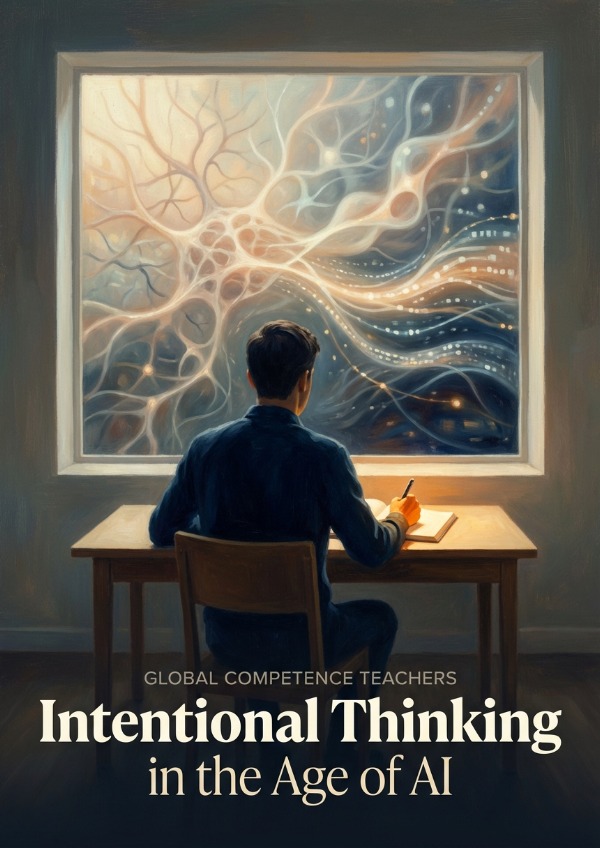
Intentional Thinking — Stay the Author in the Age of AI
AI can think for you. The question is whether you still want to.
AI can think for you. The question is whether you still want to. A fourth thinking mode for the AI age: the ability to remain the genuine author and director of your own cognitive process in a world where cognition can be fully outsourced. Covers clarity of intent, epistemic self-awareness, cognitive ownership, integration judgment, purposive framing, cognitive sovereignty, practical contexts, and a capstone manifesto — so you stay the author of your life and work, not a curator of outputs you didn't fully choose.
Collection Outline
Module 1 — The Shift: Why Thinking Has Changed
Setting the stakes. Why this collection exists.
Module 2 — Clarity of Intent: Think Before You Prompt
The quality of your thinking determines the quality of everything AI gives you.
Module 3 — Epistemic Self-Awareness: Know What You Actually Know
The survival skill of the information age: distinguishing genuine understanding from borrowed confidence.
Module 4 — Cognitive Ownership: Take Responsibility for AI-Assisted Outputs
Authorship is not about who typed the words. It's about whose judgment shaped them.
Module 5 — Integration Judgment: Working with a Brilliant, Unreliable Partner
AI is not a calculator. It's a cognitive partner with unpredictable failure modes. Knowing how to work with it is a skill.
Module 6 — Purposive Framing: Keeping the Why Alive
AI optimizes for what you ask. If you don't know why you're asking, it will answer well and take you nowhere.
Module 7 — Cognitive Sovereignty: Remain Yourself in the Age of AI
The deepest layer: maintaining an independent mind, genuine identity, and a thinking self that AI cannot erode.
Module 8 — Intentional Thinking in Practice
Translating the framework into real-world domains learners actually inhabit.
Module 9 — Building the Practice: Habits, Rituals, Long-Term Development
Intentional Thinking is not a concept to understand. It's a practice to build.
Capstone — Your Intentional Thinking Manifesto
A closing synthesis where learners articulate their own principles.