“
Catalysis is the art and science of changing the *when* without changing the *whether*.
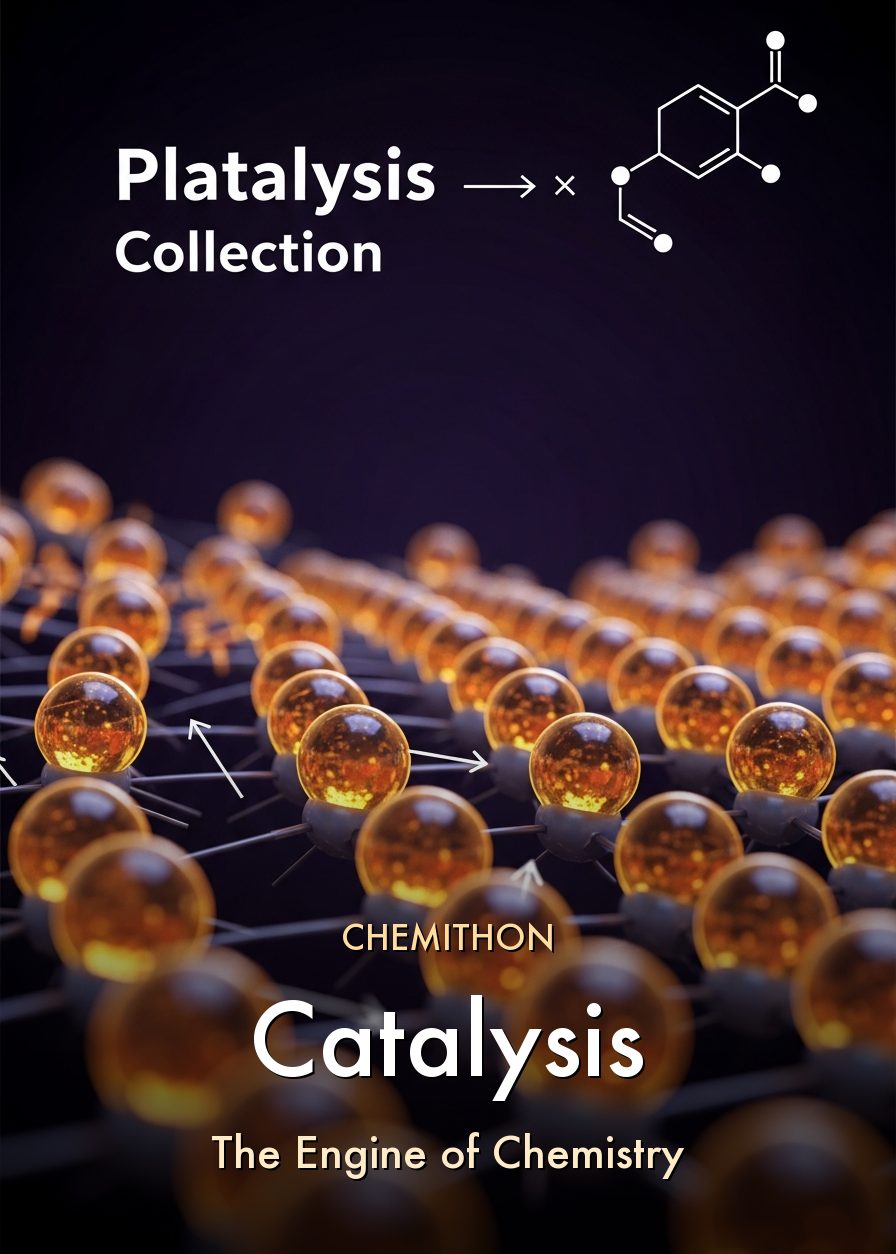
From energy barriers and everyday examples to Gibbs free energy, Arrhenius kinetics, and enzyme mechanisms
Catalysis is not an obscure laboratory technique — it is the mechanism by which your digestive enzymes work, your car's exhaust is cleaned, bread rises, and roughly half of humanity's food supply is made possible. This two-part collection builds from atoms and energy barriers all the way to enzyme kinetics, transition-state theory, TON/TOF performance metrics, and the design principles of modern catalysts. The first part develops intuition: why reactions have energy barriers, what catalysts actually do, and where catalysis appears in everyday life. The second part develops rigour: Gibbs free energy, the Arrhenius equation, reaction coordinate diagrams, homogeneous vs. heterogeneous catalysis, autocatalysis, inhibition, and the molecular machinery of enzymes.
Certificates, credits, and a record of your progress.
Reach 60% of its base credits to earn a Certificate of Completion.
View example certificateCredits accumulate in your learning tracks, building a subject-specific record.
See your credits, reading progress, quiz performance, and available exam results.
View a sample reportOne session. One clear takeaway.Each short session develops one distinct idea with a clear takeaway. Together, the sessions show how those ideas connect into a structured understanding of the topic.
Ranked by semantic similarity
Trace the element that powers life, shapes climate, and now defines humanity's greatest challenge

The portable toolkit for seeing what a choice really costs and what happens next
A methodical approach to seeing systems, finding feedback loops, and changing the structures that produce results
A scholarly survey of questioning — its philosophical foundations, cognitive science, and practice domains