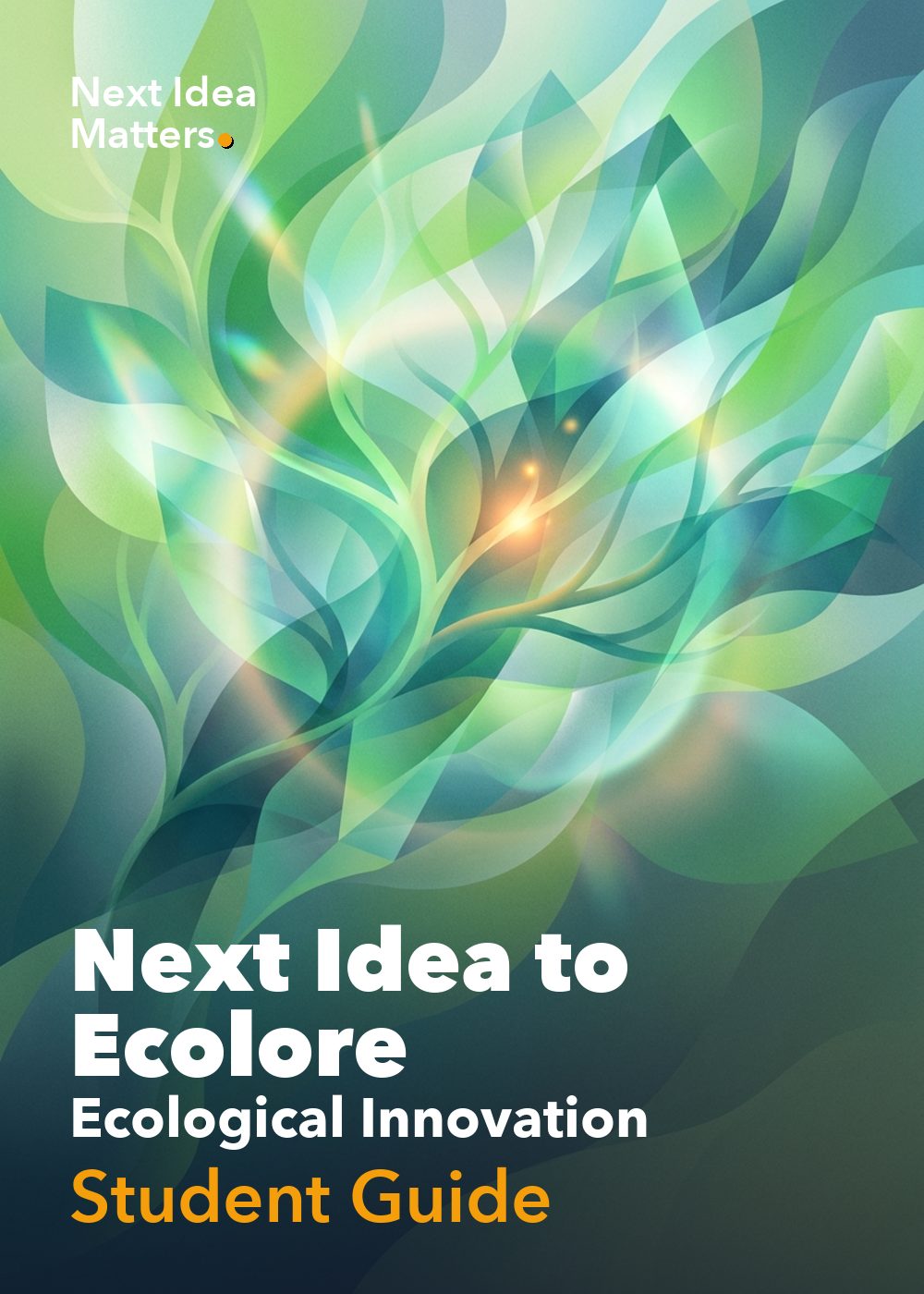
NIE Ecological Innovation — Student Guide
Last revised 6/26/2026

NIE Ecological Innovation — Student Guide

Secondary

Every review criterion explained, with examples, evidence rules, and common mistakes.

This Student Guide walks through every review criterion for the NIE Ecological Innovation track — from ecosystem problem framing and ecological cause analysis to conservation intervention design, field evidence, and final submission. Each module explains what reviewers look for, what evidence is required, and how to avoid common ecological project mistakes.

NIM TutorialStudent GuideNIE Ecological Innovation
Earn2CreditsinInnovationProject-Based LearningEcologyEnvironmental Science
9Modules39Sessions611Cards16Quizzes

Modules in this Collection’s System

Hover a module to read it directly

Project Background & Problem Framing

Understanding the problem you're solving and the context behind your project.

5Sessions

Track-Specific Core Process

The core submission process specific to your track and its review criteria.

9Sessions

Iteration & Improvement

Refining your work through testing, feedback, and iterative improvement.

3Sessions

Value, Impact & Innovation

Articulating the value, impact, and originality of your project.

3Sessions

Project Planning & Management

Organizing your team's work, timeline, and resources effectively.

4Sessions

Team Collaboration

Building a productive and accountable team environment.

4Sessions

Reflection & Learning

Making sense of what you learned from the full project experience.

4Sessions

Ethics, Integrity & AI Use

Working with integrity, respecting ethical boundaries, and using AI responsibly.

3Sessions

Final Submission & Media Artifacts

Preparing your final submission and presenting your work through media.

4Sessions

What You'll Walk Away With

  • An ecosystem problem statement grounded in local ecological data
  • A cause analysis distinguishing human behavioral drivers from biophysical mechanisms
  • A field investigation log with indicator species or ecosystem health measurements
  • An intervention design rationale explaining ecological fit for local conditions
  • A measurable outcome framework with species-level or ecosystem-level indicators

You'll Have Answers To

  • ?What makes an ecological claim specific enough to require a species-level or ecosystem-level source?
  • ?How should field investigation be designed to produce credible local ecological evidence?
  • ?What distinguishes an ecological impact from an ecological cause?
  • ?How do reviewers assess whether an intervention design is ecologically appropriate for its local conditions?
  • ?What indicator evidence is required to support an ecological outcome claim?

Critical Concepts Explored

Ecosystem ServicesBiodiversity Impact MeasurementEcological EvidenceField Investigation DesignConservation InterventionIndicator SpeciesLocal Ecological ContextHabitat Assessment
Editor's Note
A comprehensive review-criterion guide for the NIM Ecological Innovation track.

This guide covers all review criteria across 9 sections of the NIE Ecological Innovation submission. Each module explains the scope rules, evidence requirements, and specific mistakes that cost points — in language students can act on before they write.

Editor's Brief
Who it's for
This guide is for students registered in the NIM Ecological Innovation track who want to understand what reviewers assess and how to produce a submission that meets each criterion.
What stands out
The guide covers all 39 review-criterion modules across 9 sections — scope rules, evidence requirements, and the specific mistakes reviewers most commonly flag.
Read if
Read if you want to know exactly what reviewers are looking for in each section of your submission — before you submit.
Gold Quotes
General environmental statistics are a starting point. Ecological evidence is specific to your ecosystem, your location, and your specific problem.

The difference between a weak and a strong ecological submission is not the ambition of the project — it is the specificity of the evidence. Ecosystem health is measured in indicators, not general trends.

About the Curator
NNext Idea Matters

Next Idea Matters (NIM) is LearningFirst's flagship project-based competition program. The NIM Student and Advisor Guides translate each track's evaluation standards into clear, actionable guidance that helps students produce work reviewers can assess with confidence.