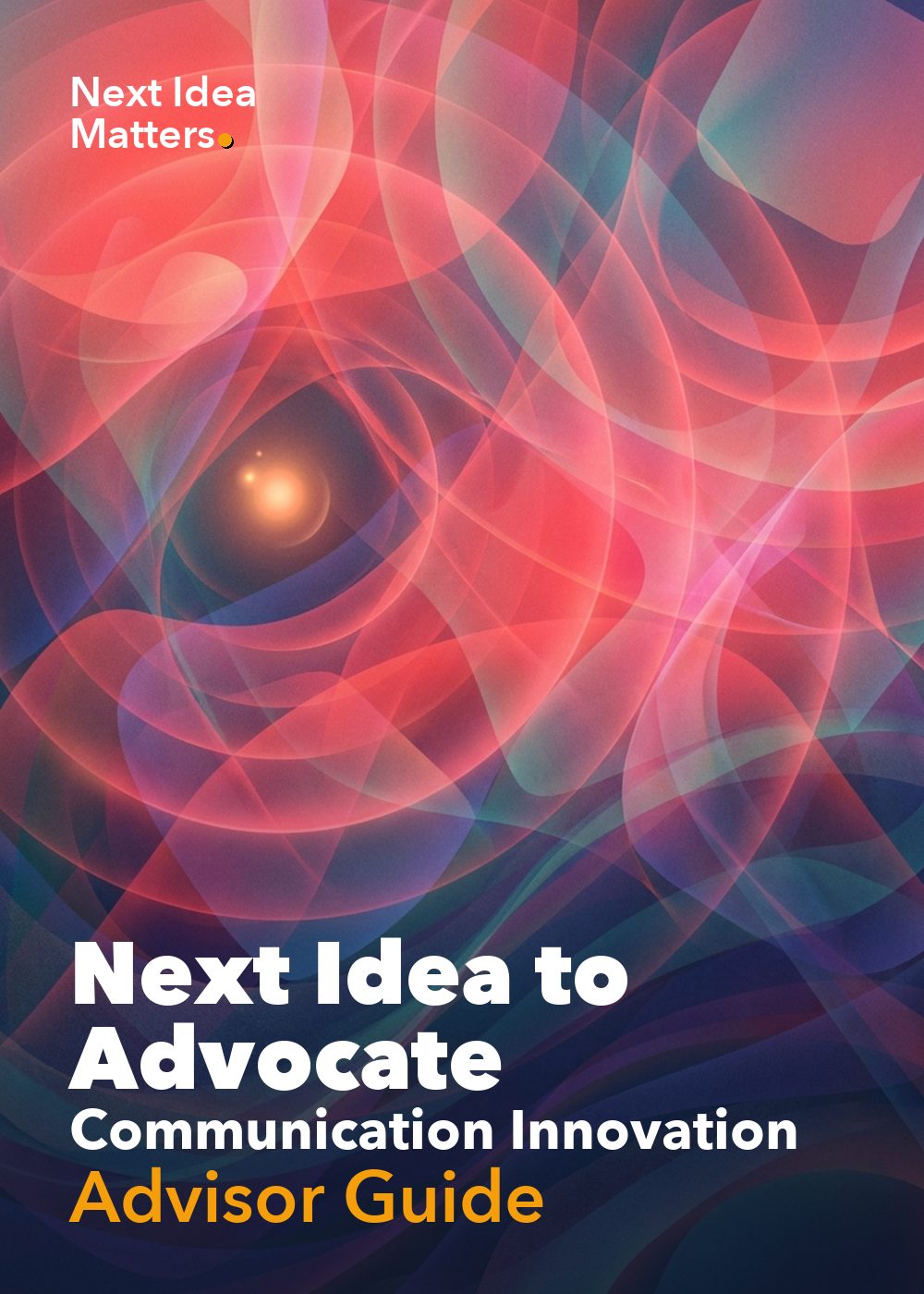
NIA Communication Innovation — Advisor Guide
Last revised 6/15/2026

NIA Communication Innovation — Advisor Guide

Professional

Coaching prompts, common student mistakes, and intervention strategies for every review criterion.

This Advisor Guide covers every review criterion for the NIA Communication Innovation track from a coaching perspective. Each module identifies common student mistakes, explains what reviewers assess, and provides targeted coaching strategies to help students produce credible communication innovation submissions.

NIM TutorialAdvisor GuideNIA Communication Innovation
Earn2CreditsinInnovationProject-Based LearningCommunication
9Modules37Sessions705Cards37Quizzes

Modules in this Collection’s System

Hover a module to read it directly

Project Background & Problem Framing

Coaching students to define their problem clearly and establish a credible project foundation.

5Sessions

Track-Specific Core Process

Guiding students through the core track-specific submission process and review criteria.

7Sessions

Iteration & Improvement

Supporting students in using feedback to improve their work across iterations.

3Sessions

Value, Impact & Innovation

Helping students articulate their project's value, impact, and distinctive contribution.

3Sessions

Project Planning & Management

Advising on project planning, timeline management, and resource allocation.

4Sessions

Team Collaboration

Facilitating effective team dynamics, communication, and shared accountability.

4Sessions

Reflection & Learning

Guiding students to reflect honestly and extract lasting learning from the experience.

4Sessions

Ethics, Integrity & AI Use

Coaching students on research ethics, academic integrity, and responsible AI use.

3Sessions

Final Submission & Media Artifacts

Supporting students in finalizing their submission and producing their media artifacts.

4Sessions

What You'll Walk Away With

  • An audience investigation protocol with specific questions about information-receiving behaviors and channel preferences
  • A channel selection justification template linking platform choices to audience evidence
  • A pre-deployment measurement plan template
  • An audience feedback session guide for prototype testing
  • A scope-check rubric for advisors to run before students finalize each section

You'll Have Answers To

  • ?How do you help a student move from demographic audience description to behavioral audience evidence?
  • ?What questions reveal whether a student's channel choice is justified or just familiar?
  • ?How do you coach measurement design before a student has deployed their intervention?
  • ?What feedback-gathering approaches are accessible for high-school communication innovation projects?
  • ?How do you catch scope violations between Section A problem framing and Section B intervention design?

Critical Concepts Explored

Audience Investigation CoachingChannel JustificationMeasurement DesignPrototype Testing with Real AudiencesScope Boundary InstructionBehavior Change EvidenceAdvisor Review ProtocolFeedback-Driven Iteration
Editor's Note
A practical coaching guide for advisors supporting NIM Communication Innovation teams.

This guide covers all review criteria across 9 sections of the NIA Communication Innovation submission from a coaching perspective. Each module identifies common student mistakes and provides targeted coaching strategies advisors can apply in pre-draft and draft-review conversations.

Editor's Brief
Who it's for
This guide is for advisors coaching student teams in the NIM Communication Innovation track. It translates each review criterion into practical coaching strategies and common mistake patterns.
What stands out
The guide covers all 37 modules across 9 sections from a coaching perspective — including the most common student mistakes and targeted interventions for each criterion.
Read if
Read if you want to coach student teams more effectively by understanding what reviewers assess and where students most commonly miss the mark.
Gold Quotes
Audience analysis is investigation, not description. Advisors who coach the question 'how does this audience actually receive information?' move students from demographics to insight.

Demographic summaries tell reviewers who the audience is. Behavioral evidence tells them how the communication strategy should be designed. The second is what scores.

About the Curator
NNext Idea Matters

Next Idea Matters (NIM) is LearningFirst's flagship project-based competition program. The NIM Student and Advisor Guides translate each track's evaluation standards into clear, actionable guidance that helps students produce work reviewers can assess with confidence.