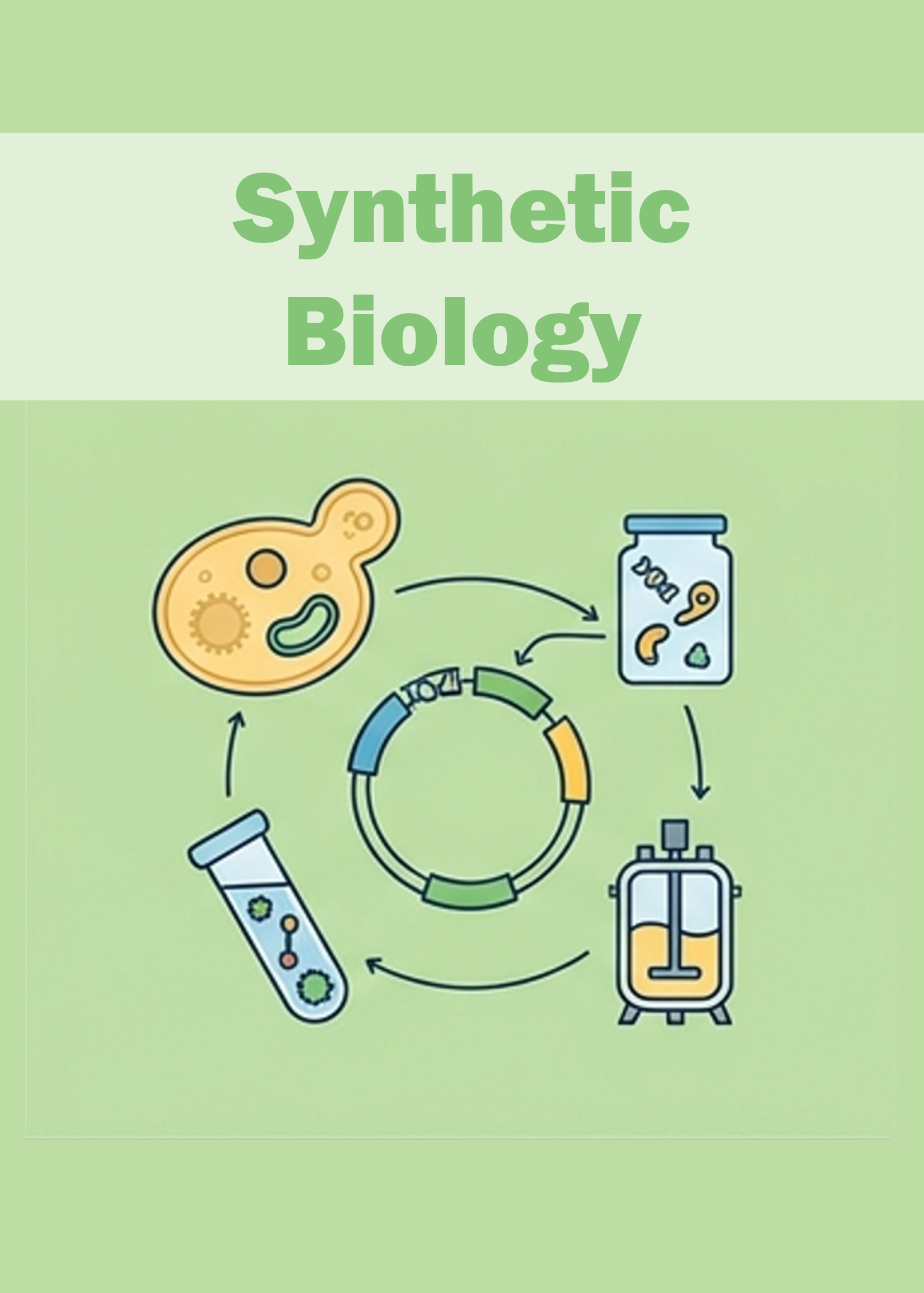
Biothon - Synthetic Biology
Last revised 5/21/2026

Biothon - Synthetic Biology

Secondary

Genetic circuits, metabolic engineering, cell-free systems, directed evolution, biosensors, and the ethics frontier — taught at Biothon competition rigor.

A comprehensive study collection for the Biothon biology competition covering synthetic biology. Topics span foundations of synthetic biology (central dogma as engineering framework, standardized biological parts/BioBricks, chassis organisms), genetic circuit design (core genetic parts, logic gates, toggle switches, advanced circuit architectures), metabolic engineering (pathway design, biofuel production, natural product synthesis and genome mining), cell-free systems and minimal cells (TX-TL systems, minimal genomes, xenobiology and genetic code expansion), directed evolution and protein engineering (random mutagenesis, rational/computational design, display technologies), biosensors and diagnostics (whole-cell biosensors, cell-free paper-based diagnostics, CRISPR detection, synthetic gene networks), and applications/ethics/biosafety (biomanufacturing, environmental remediation, biosafety/biosecurity). Designed for advanced high school students with emphasis on engineering principles, cutting-edge technologies, and real-world applications.

Academic primerBiology olympiad prep
Earn3CreditsinBiology
7Modules21Sessions228Cards70Quizzes

Modules in this Collection’s System

Hover a module to read it directly

Foundations of Synthetic Biology

Central dogma as engineering framework, BioBricks, the DBTL cycle, and the foundational principles distinguishing synthetic biology from traditional genetic engineering.

Subscription-free content inside
3Sessions

Genetic Circuit Design

Genetic circuits — toggle switches, oscillators, logic gates, feedback loops — implementing computation in living cells.

3Sessions

Metabolic Engineering

Metabolic engineering, pathway design, flux balance analysis, and the production economics behind insulin, artemisinin, and biofuels.

3Sessions

Cell-Free Systems and Minimal Cells

Cell-free systems (PURE), minimal cells (JCVI-syn3.0), and biology stripped to its essentials.

3Sessions

Directed Evolution and Protein Engineering

Directed evolution (Frances Arnold), protein engineering, codon optimization, and the techniques producing enzymes evolution never would.

3Sessions

Biosensors and Diagnostics

CRISPR-based diagnostics (SHERLOCK, DETECTR), whole-cell biosensors, and the molecular-detection frontier.

3Sessions

Applications, Ethics, and Biosafety

Applications across medicine, agriculture, environment, and the biosafety, dual-use, and governance frameworks shaping deployment.

3Sessions

What You'll Walk Away With

  • 1synthetic biology design framework covering DBTL (design-build-test-learn) cycles, BioBrick standards, and the modular composition principle that distinguishes the field from traditional genetic engineering
  • 1genetic circuit library with toggle switches, oscillators, logic gates, feedback loops, and the published canonical implementations of each
  • 1metabolic engineering toolkit covering pathway design, flux balance analysis, codon optimization, and the production economics that determine commercial viability
  • 1directed evolution playbook with the iteration strategy (mutation libraries → selection → enrichment), and the protein-engineering applications it has enabled
  • 1biosafety + ethics framework for synthetic biology covering gain-of-function debates, dual-use research of concern (DURC), DIY-bio communities, and current governance approaches

You'll Have Answers To

  • ?What does it mean to 'engineer' biology — and why has standardization been so much harder than in electrical engineering?
  • ?How do synthetic genetic circuits implement Boolean logic, oscillators, and feedback loops in living cells?
  • ?What did Frances Arnold's directed evolution Nobel reward, and why does the technique work where rational protein design has stumbled?
  • ?How are CRISPR-based diagnostics (SHERLOCK, DETECTR) and whole-cell biosensors changing molecular detection?
  • ?What are the unresolved biosafety and dual-use governance challenges synthetic biology poses, and what frameworks address them?

Critical Concepts Explored

BioBricks and modular biological partsDesign-build-test-learn (DBTL) cycleGenetic circuits: toggle switches, oscillators, logic gatesMetabolic engineering and flux balance analysisCell-free systems (PURE) and minimal cells (JCVI-syn3.0)Directed evolution (Frances Arnold)Codon optimizationCRISPR diagnostics (SHERLOCK, DETECTR)Whole-cell biosensorsBiosafety, dual-use research, biosecurity governance
Editor's Note
Synthetic biology taught as engineering, with the science underneath

This collection treats synthetic biology the way the field treats itself — as an engineering discipline built on biological substrates. Genetic circuits, metabolic engineering, cell-free systems, directed evolution, biosensors — each chapter pairs the underlying biology with the engineering principles that make programmable biology possible. The biosafety and ethics treatment is honest and substantive.

Editor's Brief
Who it's for
Biothon and IBO competitors preparing for synthetic biology and biotech rounds, undergraduate synthetic biology and bioengineering students, and pre-graduate-school readers wanting an integrated treatment of genetic circuits, metabolic engineering, and the field's ethical frontier.
What stands out
The collection refuses to treat synthetic biology as 'genetic engineering with branding' — the DBTL cycle, modular composition, biological standards, and quantitative design principles are taught as the defining commitments they are.
Read if
You want to understand how engineered microbes produce insulin and artemisinin, how CRISPR diagnostics detect pathogens, and how directed evolution produces enzymes evolution never would — at the level of the underlying engineering principles.
Gold Quotes
Synthetic biology's defining ambition is to make biology engineerable — to predict the behavior of designed systems from the behavior of their parts. The field has progressed dramatically; the goal remains aspirational.

Standardized parts (BioBricks), modular composition, design-build-test-learn cycles, and quantitative specifications are all attempts to make biological design more like electrical engineering. The context-dependence of biological parts (parts behave differently in different cellular environments) remains the key challenge — but the field has moved from one-off demonstrations to genuinely engineered production systems.

About the Curator
AAcademic Marathon

Academic Marathon is the editorial voice behind LearningFirst's Physithon and Biothon competition-prep collections — producing rigorous, mathematically grounded primers across the cutting-edge sub-disciplines of physics and biology that competition-track high-school students need to know.