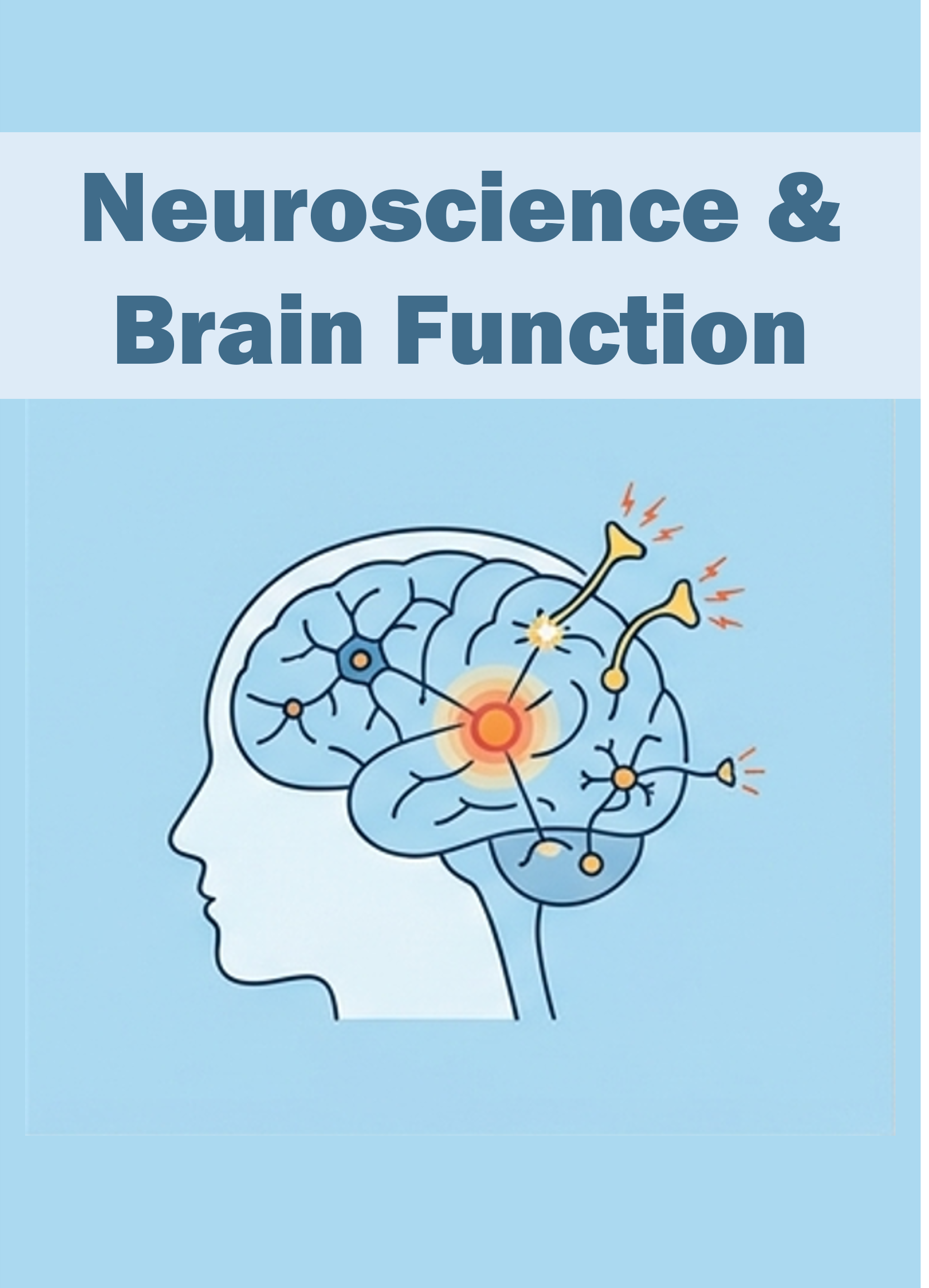
Biothon - Neuroscience & Brain Function
Last revised 5/21/2026

Biothon - Neuroscience & Brain Function

Secondary

Cellular neuroscience through cognitive neuroscience, neuroimaging, neurological disorders, and computational neuroscience — taught at Biothon competition rigor.

A comprehensive study collection for the Biothon biology competition covering neuroscience and brain function. Topics span cellular neuroscience (neuron structure, action potentials, synaptic transmission, neurotransmitter systems, glial cells), neural circuits and systems (sensory systems, motor systems, autonomic nervous system, neural coding), brain anatomy and function (cerebral cortex, limbic system, brainstem/cerebellum, brain development and plasticity), cognitive neuroscience (learning and memory, attention, language, decision-making and consciousness), neuroimaging and experimental techniques (electrophysiology, fMRI, optogenetics, brain-computer interfaces), neuropharmacology and neurological disorders (drug mechanisms, neurodegenerative diseases, psychiatric disorders), and computational neuroscience (neural models, connectomics, brain-inspired AI). Designed for advanced high school students with emphasis on molecular mechanisms, systems-level function, and modern experimental approaches.

Academic primerBiology olympiad prep
Earn3CreditsinBiology
7Modules26Sessions253Cards79Quizzes

Modules in this Collection’s System

Hover a module to read it directly

Cellular Neuroscience

Neuron structure, action potentials (Hodgkin-Huxley), synaptic transmission, and the cellular biophysics underlying everything else.

Subscription-free content inside
5Sessions

Neural Circuits and Systems

Excitatory/inhibitory balance, recurrent and feedforward circuits, central pattern generators, and the principles of neural computation.

4Sessions

Brain Anatomy and Function

Cortical regions, subcortical structures, the limbic system, and the brain anatomy that supports specific behaviors.

4Sessions

Cognitive Neuroscience

Perception, attention, memory, decision-making — the cognitive neuroscience of how the brain produces experience and action.

4Sessions

Neuroimaging and Experimental Techniques

fMRI, MEG, EEG, two-photon microscopy, calcium imaging, and the experimental techniques that made modern neuroscience possible.

3Sessions

Neuropharmacology and Neurological Disorders

Neuropharmacology, SSRIs, L-DOPA, antipsychotics, and the major neurological disorders (Alzheimer's, Parkinson's, MS, stroke).

3Sessions

Computational Neuroscience and Emerging Frontiers

Computational neuroscience, Hopfield networks, predictive coding, reinforcement learning, and the brain-AI interface frontier.

3Sessions

What You'll Walk Away With

  • 1action potential reference card with the Hodgkin-Huxley framework, the ion currents producing the spike, and the variations that explain different neuron types
  • 1synaptic transmission toolkit covering chemical and electrical synapses, the major neurotransmitter systems, and the receptor types each acts on
  • 1brain anatomy + function atlas mapping cortical regions, subcortical structures, and the consequences of damage to each
  • 1neuroimaging modality comparison for two-photon, calcium imaging, electrophysiology, fMRI, MEG, and EEG — what each measures, at what scale, with what tradeoffs
  • 1neurological disorder briefing covering Alzheimer's, Parkinson's, multiple sclerosis, stroke, and the pharmacological and emerging therapies for each

You'll Have Answers To

  • ?How does the Hodgkin-Huxley framework quantitatively explain action potentials — and what neuron types require additional ion channels?
  • ?What does brain region localization actually mean given that most complex behaviors recruit distributed networks?
  • ?How do fMRI, MEG, EEG, two-photon microscopy, and electrophysiology each reveal different aspects of brain function?
  • ?Why does neuropharmacology work for some disorders (Parkinson's, depression) and persistently disappoint for others (Alzheimer's, schizophrenia)?
  • ?What does computational neuroscience (Hopfield networks, predictive coding) add that empirical neuroscience can't capture alone?

Critical Concepts Explored

Hodgkin-Huxley action potential modelChemical and electrical synapsesExcitatory/inhibitory balance and circuit dynamicsCortical lobes and functional specializationLimbic system and the hippocampusSensory pathways (visual, auditory, somatosensory)fMRI, MEG, EEG, two-photon microscopyNeurotransmitter systems and receptor pharmacologyAlzheimer's, Parkinson's, multiple sclerosis, strokeComputational neuroscience: predictive coding, attractor networks
Editor's Note
Neuroscience from action potentials to consciousness, taught coherently

This collection covers the full neuroscience arc — Hodgkin-Huxley membrane biophysics, synaptic transmission, circuit-level computation, systems-level cognition, neuroimaging, pharmacology, and computational modeling — in one consistent voice. The clinical material (stroke, Alzheimer's, MS, Parkinson's) is treated with the rigor a future neurologist or neuroscientist needs.

Editor's Brief
Who it's for
Biothon and IBO competitors preparing for neuroscience rounds, pre-medical students wanting rigorous neuroscience, and undergraduate cognitive-science students looking for an integrated treatment.
What stands out
Cellular, circuit, systems, cognitive, clinical, and computational neuroscience are taught as one continuous discipline — the same student who learns the Hodgkin-Huxley equations also learns Hopfield networks and predictive coding.
Read if
You want to understand how the brain actually works at every relevant scale — from ion channels to consciousness, from electrophysiology to fMRI, from neurotransmitter pharmacology to deep neural networks.
Gold Quotes
The Hodgkin-Huxley equations (1952) quantitatively describe how voltage-gated sodium and potassium channels produce the action potential. They remain one of the most successful mathematical models in biology.

Hodgkin and Huxley used squid giant axons to measure ion currents and built a coupled differential-equation model whose predictions match experimental waveforms with near-perfect fidelity. The 1963 Nobel honored the work. Subsequent neurons (cortical, hippocampal, dopaminergic) require additional ion channels, but the H-H framework remains the foundation. Modern computational neuroscience builds from H-H to entire circuit and brain-scale simulations.

About the Curator
AAcademic Marathon

Academic Marathon is the editorial voice behind LearningFirst's Physithon and Biothon competition-prep collections — producing rigorous, mathematically grounded primers across the cutting-edge sub-disciplines of physics and biology that competition-track high-school students need to know.